
Disclosure: As an Amazon Associate I earn from qualifying purchases. How this site works
Spinning vs Baitcasting Rod
Spinning and baitcasting rods look similar but are built for different reels and techniques. This comparison explains the differences and when each one makes sense.
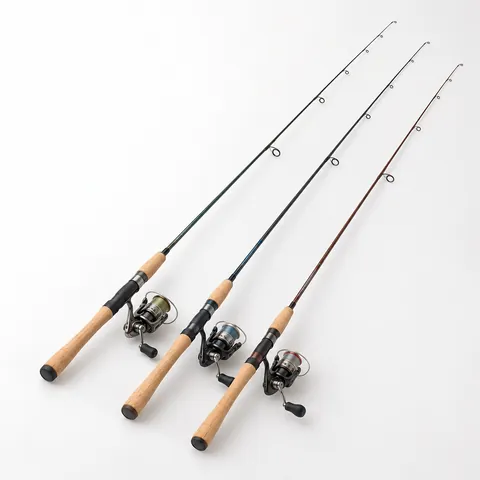 Ultralight trout rods — 5 ft 6 in – 6 ft 6 in
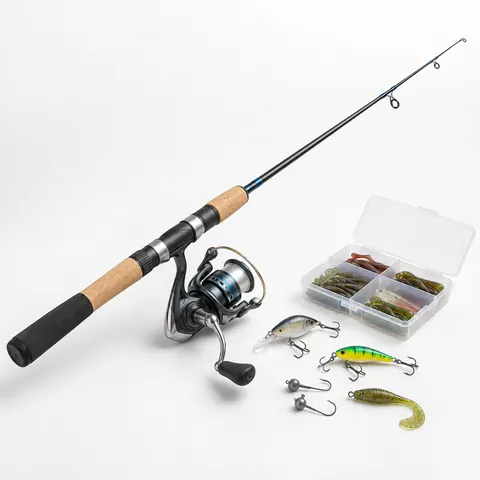 Beginner spinning combos
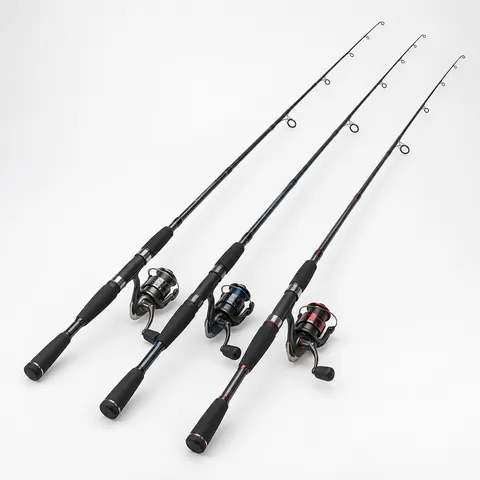 Spinning rods
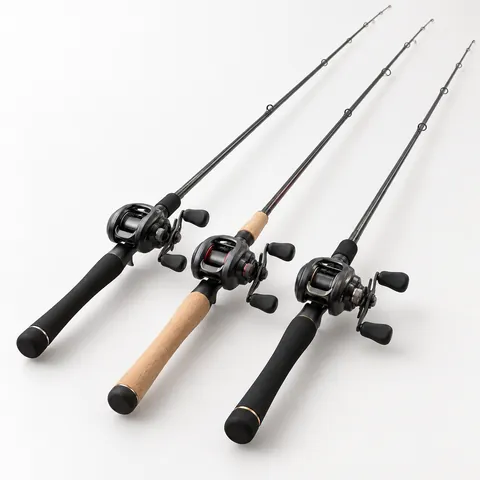 Casting rods
The key differences
| Spinning | Baitcasting | |
|---|---|---|
| Reel position | Hangs below the rod | Sits on top |
| Guides | Large first guide, on the underside | Smaller guides on top; often a trigger grip |
| Ease of learning | Easy | Takes practice (backlashes) |
| Best lure weights | Light to medium (1/32–1/2 oz) | Medium to heavy (1/4 oz and up) |
| Line | Light to medium; braid with leaders | Heavier mono, fluoro and braid |
| Accuracy and control | Good | Excellent with practice |
| Power in heavy cover | Moderate | High |
When to choose spinning
Choose spinning gear for light lures and line, finesse techniques, trout and panfish, most inshore saltwater fishing, fishing in wind with light baits, and whenever simplicity matters. See spinning rods in the length and power you need.
When to choose baitcasting
Choose baitcasting gear for heavier lures such as jigs, spinnerbaits, crankbaits and swimbaits, for heavy line around weeds and timber, and when accurate, repeated casts to targets matter — which is why it is standard among bass anglers. See casting rods.
Can I use a spinning reel on a casting rod?
No. The guide sizes and positions are designed for one reel type. A spinning reel on a casting rod hangs on the wrong side with guides too small, and the reverse does not work either. Buy rod and reel as a matched pair, or check the rod is labelled spinning or casting.
A practical approach
Many anglers start with a spinning outfit and add a baitcasting rod later for heavier bass techniques. If you only own one rod, make it a 7 ft medium spinning rod; if you add a second, a 7 ft medium-heavy casting rod complements it well.
How do you tell a spinning rod from a baitcasting rod?
If the label is missing, look at the handle and guides before you buy. A spinning rod is built to bend with the guides facing down. A casting rod is built to bend with the guides facing up, with the reel sitting on top of the blank.
The quickest clue is the first guide closest to the reel seat. On a spinning rod, that guide is usually much larger because line comes off a spinning reel in wide coils. On a casting rod, the first guide is smaller because line comes off the reel in a straighter path.
Many casting rods also have a small trigger under the reel seat for grip. Not every casting rod has a large trigger, and not every spinning handle looks the same, so use the guide layout and reel-seat position as the main checks.
- Spinning rod: large lower guides, reel hangs below, no trigger grip in most cases.
- Casting rod: smaller upper guides, reel sits on top, often has a trigger grip.
- If shopping online, check the product title and specs for “spinning” or “casting,” not just length and power.
- If buying a combo, make sure the rod and reel are already matched by type. A beginner can avoid mistakes by starting with beginner spinning combos.
Which rod type is better for beginners?
For most new anglers, spinning is the easier first choice because the reel is simpler to cast and more forgiving with light lures. You still need to manage loose line and close the bail by hand, but you do not have to tune spool brakes before every major lure change.
Baitcasting gear is not hard forever, but it asks more from the angler. You adjust spool tension, braking, thumb pressure, and casting motion. If those are off, the spool can spin faster than the lure is pulling line, which creates a backlash.
A good rule is to start with spinning if you fish mixed species, smaller ponds, trout streams, docks, piers, or live bait. Start with baitcasting only if you know you will mostly throw medium to heavy bass lures and are willing to practice in open space before fishing around cover.
| Situation | Better first choice | Why |
|---|---|---|
| Light lures or small hooks | Spinning | Casts light weight with less setup |
| Fishing with kids or guests | Spinning | Easier to explain and share |
| Skipping baits under docks | Spinning for most beginners | Less backlash risk while learning |
| Pitching jigs to weeds or wood | Baitcasting | More thumb control and stronger line options |
| One all-purpose starter rod | Spinning | Covers more light and medium presentations |
How rod length, power, and action affect the choice
Reel type is only one part of the decision. Length, power, and action determine how the rod casts, fights fish, and handles lure weight. A poor match in these specs can feel worse than choosing the “wrong” reel style.
For a spinning rod, common all-around choices are medium-light to medium power with a fast or moderate-fast action. That gives enough tip flex for lighter lures and enough backbone for average freshwater fishing. If you fish tiny trout jigs, ultralight spinning gear makes more sense; if so, compare ultralight trout rods instead of buying a general-purpose rod that is too stiff.
For baitcasting, medium to medium-heavy power is common because the techniques often use heavier hooks, heavier line, and more cover. A fast action helps drive single hooks into fish. A moderate or moderate-fast action can be easier with treble-hook lures because it gives fish less leverage to pull free.
Check lure rating before anything else. A rod rated for 1/8 to 3/8 ounce will not load well with a heavy jig, and a rod rated for 3/8 to 1 ounce will feel clumsy with a tiny grub. The printed lure rating is not perfect, but it is the best starting point for matching the rod to the lures you actually throw.
- Choose shorter rods when accuracy in tight spaces matters more than distance.
- Choose longer rods for longer casts, line pickup, and open-water presentations.
- Choose lighter power for small lures, thin line, and smaller fish.
- Choose heavier power for thick vegetation, wood, strong hooks, and larger fish.
- Choose faster action for sensitivity and hooksets; choose more moderate action for moving baits and treble hooks.
Casting distance, accuracy, and wind: what changes on the water?
Neither style automatically casts farther in every situation. With light lures, spinning gear usually has the advantage because the lure can pull line from the spool with little startup resistance. With heavier lures, a well-adjusted baitcaster can be very accurate and efficient, especially for repeated casts to the same target.
Wind changes the equation. A light lure thrown into the wind slows down quickly. On a baitcaster, the spool may keep spinning after the lure loses speed, which can cause an overrun. Spinning gear is usually easier in that situation, although loose coils and wind knots can happen if you overfill the spool or reel in slack line.
Accuracy comes from practice, but the tools feel different. Spinning gear is good for open casts, light baits, and letting line peel off freely. Baitcasting gear gives direct thumb control over the spool, which helps stop a lure quietly beside a stump, dock post, grass edge, or bank target.
If you are buying for bass and want to add target-casting power, a medium-heavy casting setup is the normal next step after a spinning outfit. Compare casting rods by lure rating, handle length, and power instead of choosing only by rod length.
Frequently asked questions
Do baitcasting rods cast farther than spinning rods?
Not always. Spinning rods often cast light lures farther because line leaves the reel with less startup resistance. Baitcasting gear can cast medium and heavy lures very well, but distance depends on reel setup, lure weight, line, rod loading, and the angler’s casting motion.
Is a spinning rod or baitcasting rod better for bass fishing?
Both are useful for bass. Spinning is better for finesse worms, small swimbaits, light shaky heads, drop shots, and other lighter presentations. Baitcasting is better for many jigs, Texas rigs, spinnerbaits, buzzbaits, frogs, and fishing around heavier cover.
Can I put braided line on both spinning and baitcasting reels?
Yes, braid can work on both reel types. On spinning gear, many anglers use lighter braid with a fluorocarbon or monofilament leader for better casting and less line twist. On baitcasting gear, braid is common for grass, frogs, and heavy cover, but very thin braid can dig into itself on hard hooksets.
Why do baitcasters backlash?
A backlash happens when the reel spool spins faster than the lure is pulling line. It is usually caused by too little braking, too little thumb pressure, a lure that is too light for the setup, or casting hard into wind. Start with more brake, tighten spool tension slightly, and make smooth casts until your thumb control improves.
Should my first fishing rod be spinning or baitcasting?
For most people, the first rod should be spinning because it handles more common beginner situations with less setup. It is easier for light lures, live bait, panfish, trout, and general pond or bank fishing. Add baitcasting later if you need more control with heavier lures and heavier cover.
Disclosure: As an Amazon Associate I earn from qualifying purchases. This site may earn a commission when you buy through its links, at no extra cost to you. Product details come from public manufacturer information; always check the merchant page for current specifications and prices. We have not hands-on tested the products described here.